
Category: News

  • Bring Back the Spark Challenge

    Bring Back the Spark Challenge

    Every Behaviour is Trying to Get a Need Met

    You may know that I counsel couples, having trained with Dr Stan Tatkin, Dr Tammy Nelson, Dr Emily Nagoski, and been one of the top tantra teachers in the 90s. I’m a romantic, but over the years I have seen that love is a skill, not just a verb!


    Esther Perel talks about the 7 Verbs That Shape the Way You Love that include: To Ask, To Take, To Receive, To Give, To Share, to Refuse, To Play and Imagine. Some verbs we are stronger in as we have had the modelling growing up and some we need to practice more, for some people, this is to ask, or to refuse!
    In relationships we often ask of our partners to be someone they have no idea how to be, they haven’t developed the skills through modelling, we even fight for it thinking this will change it, rather than see it as lacking the internal software that needs support in developing. We have this hidden concept of normal that we expect the other to meet, without ever discussing. ie ‘My expectations in this relationship are….(Add yours here).’ ‘What I would like to be guaranteed in this relationship is…..(Add yours here)’. ‘What I can guarantee in this relationship is …(add yours here)’.
    Inherent in our protest behaviour or the push and pull, are fundamental needs that are trying to be met. Often in relationships the fundamental needs driving behaviour are:

    • Do I matter to you? (Matter)
    • Am I safe? (Safety)
    • Are we connected? (Connection)

    Words are not enough!
    Graduating from Maslow’s Hierarchy of needs, Max Neef developed a more comprehensive list of fundamental needs.  Inherent in every behaviour is a need trying to get met yet we have not taken the time to identify the need that is eliciting the behaviour.
    So here are a few pointers:

    • Identify a behaviour that you keep doing, or a reaction that you have.
    • Is there a solution you are asking the other to give you? or fighting for?
    • Ask yourself, ‘If I had this solution, what would it then give me?’
    • Use the Needs sheet  to identify the need that is trying to be met
    • Then ask yourself, ‘How could I begin to give myself this need?’
    • Then ask yourself, ‘How can I ask another to support me with this need?’ Remember there are only conflict of solutions, there are never conflict of needs.
    • Putting it into a sentence whilst staying close to your own needs means owning the problem. The sentence could look something like this,

    “I miss connecting (need) with you and I find myself getting overwhelm when I don’t feel connected. Would you be willing to make some time to do something together throughout this week, so that I feel closer to you?”

    • Pop the need in the middle of the relationship for both to take care of rather than expecting one person to satisfy all your needs. Shift from pro-self and just getting your need me at the expense of the other, to pro-team (the WE gig) where both parties get their needs met. This not only strengthens the relationship, self esteem of each other, but also meets the needs for fairness, mutuality, sensitivity and justice. 

    I propose a 30 day challenge, supported with a few tips and that is to ‘Bring the Spark Back Challenge‘. Over the next month find ways to bring the spark back in your relationship such as:

    • listen for needs; your own and your partner’s,
    • to find ways to connect, intimately or otherwise
    • to support novel experiences (creates new connections and long term memory)
    • rediscover what you do well together
    • make time to find what you can both do better in the relationship
    • play and imagine – what are you favourite games?
    • discover how to make each other laugh, then rinse and repeat
    • discover how to bring out the best in each other, so you get the best from your partner!

    As a community this is an opportunity to share your experiences your insights, what works for you and what doesn’t. We would love to hear from you

    Bring Back the Spark Challenge starts today!
  • Ten Keys to Thriving

    Ten Keys to Thriving

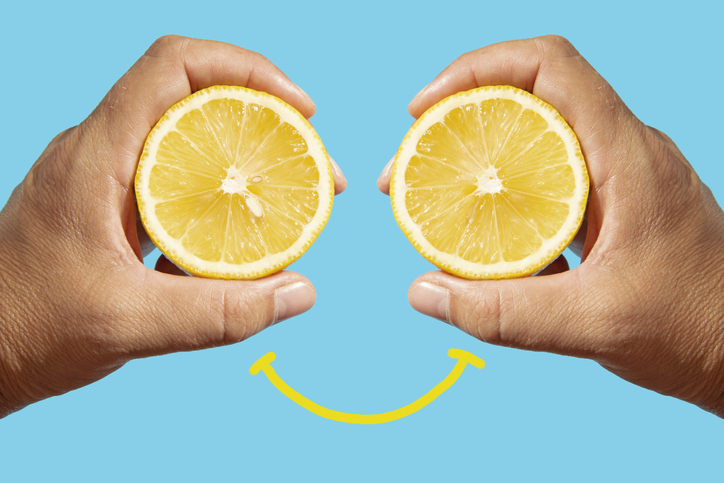
    When life throws you lemons here are keys to thriving rather than just coping!

    Over the last 35 years I have been experimenting with how to regulate the nervous system, change the brain, and to rest in who we really are. Here is my top 10 practices:

    1. At the beginning of the day, before you jump out of bed, Create your Day: that is consciously create the day that you want to live. Combine thoughts with feelings to create. Don’t vision up something you can’t want to live. If your brain says ‘No’ to something you really want bring Compassion to that part and say “I am so sorry that it feels undeserving, not good enough” etc until it comes back to peace and stillness. Then Create your day again. Start small if you like then as you gain more confidence add bigger hearts desires. Start with “Today I will experience….”
    1. Before you wire your brain to a device, wire your brain to the truth of who you are, nature and meditate first thing in the morning, ideal on the earth outside as the morning sun is rising. Yogic or active meditations are more apt for the western mind and body as they burn up cellular memory whilst aligning you with true consciousness and peace. Develop a spiritual practice that supports the realisation of who you really beyond the neurosis of the mind. A powerful place to start the day from.
    1. Exercise, Diet and Sleep – our bodies crave exercise, oxygenating the body and brain in the morning means, for instance the hippocampus enlarges creating more ease in making all those decisions throughout the day. Find an exercise practise that energises your body and brings your mind to quiet. Ensure that you take care of your sleep and find the diet that most suits your body, it maybe the opposite of what you are doing right now!
    1. Sunshine; Go Outside at least once a day and sit in the sun – we are light and vitamin D deprived resulting in low immune system, digestive issues, exhaustion and depression etc. D Minder App helps monitor your sun exposure to ensure you are getting enough vitamin D. 
    1. Gratitude is the Attitude Throughout the day keep a journal and not only writing in it but drawing in it so the right hemisphere of the brain is engaged. This changes the way you see the world and helps prevents the consequences of complaining and the negative bias in the brain.
    1. Take care of your relationships so they take care of you. Healthy relationships are the biggest predictor to longevity. Create daily connection rituals with your partner or friends daily. We are social creatures and from a psychobiological approach we are wired to each other. Not only does this prevent the effects of loneliness but also wires your brain for secure functioning, knowing that someone else has your back, you are a team and you are supported out in the world. Furthermore it regulates your nervous system. This is social medicine! Connection Rituals, 10 Keys to Couples Communication.
    1. Question stressful thoughts with The Work of Byron Katie so they let go of you, therefore the way you see the world changes, reduces stress, creates ease and peace. Without the stressful thoughts conflict is reduced, you come into resonance with a whole other reality you couldn’t see before and how life truly does support you. How Beliefs Work
    1. Develop Healthy Habits that change your brain, body and energy bringing about a work life balance. Dan Seigel created the Healthy Mind Platter outlining the optimum balance for healthy brain function. Find habits that allow you to rest, be active, create down time as well as social time, and focus time. Too much of one means our body brain will at some point ask us to stop!
    1. Know how to deal with feelings so they do not rule you. Direct Experience, Emotional Freedom Technique, Compassionate Key work, Internal Family Systems Therapy, find what works for you. Feelings are energy, therefore if you resist them they get locked in your body, if you surrender to them they transmute and alchemise into consciousness and peace. Resistance is the only cause of emotional pain! All the Feels Series on Spotify to support you along the way! Become a master of your own internal emotional ecology. 
    1. Viktor Frankl once said “Those who have a ‘why’ to live, can bear with almost any ‘how’.” “Don’t aim at success. The more you aim at it and make it a target, the more you are going to miss it. For success, like happiness, cannot be pursued; it must ensue, and it only does so as the unintended side effect of one’s personal dedication to a cause greater than oneself or as the by-product of one’s surrender to a person other than oneself. Happiness must happen, and the same holds for success: you have to let it happen by not caring about it. I want you to listen to what your conscience commands you to do and go on to carry it out to the best of your knowledge. Then you will live to see that in the long-run—in the long-run, I say!—success will follow you precisely because you had forgotten to think about it” – Brave the Wilderness, listen to that inner voice and live it!

  • I Am So Sorry

    I Am So Sorry

    Recently I experienced a deep hurt and betrayal, something I had not experienced for a very long time. What was surprising amongst the directly experiencing the feelings of rage, hatred, anger, hurt and despair was a part of me that was simply watching the experience. I am not talking about dissociation, as I was right in there experiencing all the feels, yet another part was aware of experience of it, the energy of it, the pure energy of the feelings.

    So with the help of a dear colleague, we all need friends in a time of crisis, we began to say sorry to that part of me who experienced the sadness, grief, despair, betrayal, the rage, the feeling of never good enough, trying to prove myself, the rejection, being unseen, unheard, the list was endless.

    When was the last time someone apologised for what they did and it really got in?

    The surprisingly simple result was that the feelings came and went as I directly experienced them, they simply washed through me. So I kept going into the hurt and fears as a child and how this instance related to those unhealed times. What was left was pure energy of me, life itself, peace.

    So I wanted to share this with you in the hope that those very challenging experiences get easier and you do not lose yourself in the midst of distress and heartbreak.

    Find the Part of You Who Is Distressed

    Take a moment to drop into your body, just how it is, with all the feels, and simply notice that there is a part of you distressed, overwhelmed, confused, hurting…etc

    Breathe with that part, maybe even put your hand on your heart to support that part.

    Begin to say to this part quietly within, whilst adding your own feelings:

    “I am so sorry you got to feel ………..(sad, insert your feeling here)”

    Drop into the feeling, deeply allowing that part of you to experience how it is/was, as well as acknowledging how it is for that part. Saying yes to that part who tries so hard to have their story told, and how it was/is for them.

    Then to say the sentence out loud to that part. “I am so sorry you got to feel ………..(sad, insert your feeling here)”

    Drop into the next feeling and what is there and repeat the process, each time directly experiencing, surrendering to the feeling in the body with that part, like holding a friends hand whilst they grieve.

    Apologising

    Here are some examples of feelings and ways to acknowledge the reality of that part:

    “I am so sorry you felt betrayed….”

    “I am so sorry you were made to feel ……”

    “I am so sorry they didn’t see you….”

    “I am so sorry you never felt enough……”

    “I am so sorry you felt as though you didn’t matter…..”

    “I am so sorry you……”

    “I am sorry you…”

    Keep going until there is just peace.

    This work is inspired by Internal Family Systems Therapy, Compassionate Key work as well as the Hawaiian healing practice, Ho’oponopono, one of forgiveness and reconciliation that restores harmony within you and around you.

    Daily Practice

    When things get tough, a daily practice is essential to keep vigilant in meeting the energy that is struggling to be digested, integrated and felt. Add complex grief in there, where trauma is intermixed with grief, you have a wild ride of feelings.

    Taking time to sit with the parts of us who got hurt, frightened, overwhelmed and distressed, to connect to that part and apologise helps create new neurological pathways, burns up cellular memory and uses memory reconstruction to heal long forgotten parts of us that still get triggered in our everyday life. What shows up is the experience of coming home to yourself and the peace of who you really are.

    You may like to set some time aside everyday to sit and connect with this part, to drop into the body and begin to find the feelings trying to be seen and start to say, “I am so sorry you feel so frightened (insert your feeling here)”, “I am sorry you felt like you…….” etc

    Then see what changes in your life.

    _______________________________________

    Written by Brenda Sutherland (Founding Director of The Awakening Group)

    We would love to hear what changes in your life. Simply add your comments below.